PF101: A Musical Tarot
This course is in progress and expected to finish on April 19, 2026.
At the beginning of The Way of Tarot, Alejandro Jodorowski tells a story of how he first encountered the Tarot. At the age of seven, his father, Jaime, took him to Crazy Abraham’s billiard parlor. Little Alejandro took no notice of the billiard games; instead, he watched Crazy Abraham build card houses: “He would leave these huge and imposing constructions, no two of which were ever alike, on the bar counter far from any drafts until he got drunk and intentionally knocked them down, only to immediately begin building another. Jaime would mockingly tell me to ask the ‘loony’ why he did this. Smiling sadly, he would give a child the answer he did not wish to give to adults: ‘I am imitating God, little one, the one who creates us, destroys us, and with what’s left of us, he rebuilds.’”
The Tarot is a system of 78 illustrated cards, and for those who trust it and practice with it, the whole world is contained within it, every thing, being, event, process, and person we can experience. The cards hold a mirror up to our existence. Indeed, as Crazy Abraham knew, they do more than that: the cards are what we’re made of. In this respect, Tarot is like music. Music, too, both represents and participates in our lives. We don’t just listen to music, we are music. Tarot is the music of our souls in pictorial form. A study of music and Tarot makes a study of our own lives.
For five weeks, starting on Thursday March 19, Phil Ford will be leading a course called “A Musical Tarot” on Weirdosphere. Each week he will select cards from the Tarot and choose pieces of music that align with their energies. Students will be invited to read excerpts from such classic works as Jodorowski’s The Way of Tarot and the anonymous Meditations on the Tarot and to listen to selected pieces of from classical, jazz, pop, rock, hip-hop, and other streams of music. The Tarot is a sort of cosmic escritoire into whose 78 compartments we can sort all the gestures and movements of a human soul. And these are also the gestures and movements that music traces in air. So (for example) in the desk drawer labeled “The Hierophant” we might find JS Bach’s Well-Tempered Clavier sitting next to Sleep’s doom-metal opus Dopesmoker. The study of Tarot can give us a music history made strange by the subtle and hidden imaginal wavelengths that connect pieces of music from across boundaries of period, style, genre, and tradition.
Through lectures, interactive class sessions, and the shared and collective creation of tarot-inspired playlists, we will grope our way towards a weird musicology. You don’t need any specialist knowledge or music theory chops, just a love of music and a curiosity about the Tarot.
Format
The course consists of five weekly lectures, each 90 minutes long, and as many “office hours” sessions, where students can interact with Phil Ford by asking questions and contributing ideas to the evolving discussion.
As with all Weirdosphere offerings, PF101 includes a dedicated Course Community where instructors and participants can post thoughts, share links, and exchange between lectures. Sessions are recorded for asynchronous viewing and remain available to registered participants after the course concludes.
Schedule
The course begins on Thursday, March 19, 2026, and ends with a final group discussion on Sunday, April 19, 2026. All meetings take place over Zoom via the Weirdosphere learning platform.
- Lecture Hall sessions will take place on Thursdays, at 5 pm Pacific / 8 pm Eastern. These meetings are recorded to allow students in more distant time zones to attend asynchronously.
- Office Hours sessions will take place on Sundays, at 12 pm Pacific / 3 pm Eastern. This time slot is chosen to allow students from as many time zones as possible to attend live. Like the lectures, these sessions will be recorded.
Sessions are recorded and remain available to registered participants after the course concludes.
Homework
From week to week, Phil will assign excerpts of texts to be read and pieces of music to be listened to.
Why Take This Course?
Students will get to:
- Develop an understanding and appreciation of the connections between music and Tarot.
-
Engage directly with Phil in weekly discussions, exchanging questions and ideas with both the instructor and fellow students over Zoom.
-
Gain access to recordings of lectures and discussions.
-
Participate in an ongoing conversation by posting, sharing, and exchanging direct messages with the instructor and other students on the Weirdosphere platform.
-
Join an online learning community inspired by Weird Studies, gaining discounts on future and past offerings.
Instructor Bio
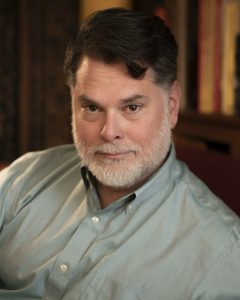
Phil Ford (Ph.D. University of Minnesota, 2003) is an associate professor of musicology at the Indiana University Jacobs School of Music. He has also taught at Stanford University and the University of Texas at Austin. His work has dealt especially with postwar American culture and music (jazz, pop, film music, the avant-garde), as well as sound, musical performance, philosophies of experience, and the intellectual history of counterculture. He is the author of Dig: Sound and Music in Hip Culture (Oxford University Press, 2013) and has published essays in Representations, Journal of Musicology, Musical Quarterly, and elsewhere. He was the founder and lead writer for the blog Dial ‘M’ for Musicology, which ran from 2006 to 2018, and nowadays co-hosts an arts and philosophy podcast, Weird Studies, with philosopher J. F. Martel. His current work concerns magical and contemplative styles of thought, feeling, and experience in various contexts, musical and otherwise.