WS103: Hunting the White Whale
A Course on Moby-Dick
This course is in progress and expected to finish on March 1, 2026.
A singular work of American fiction, Herman Melville’s Moby-Dick mirrors its namesake in more ways than one: enormous, imposing, elusive, and utterly strange. The story of Captain Ahab’s blasphemous hunt for the albino whale has kept critics and exegetes scribbling madly since the novel was hauled out of the literary gutter more than half a century after its initial release. More than any modern book, this one invites interpretation to the exact extent that it resists explanation. Prophetic, mystical, unhinged, it is a book of riddles and mysteries, a secular scripture that makes all things weird.
J.F. and Erik will take on this tome by sharing what makes it special to each of them, both as a work of American literature and as an esoteric plunge beneath the grinding surface of modernity. Bringing the novel into conversation with religion, philosophy, esotericism, science, and art, they will show how Moby-Dick continues to speak to our time.
The course will approach the text from multiple angles, connecting it to later authors and ideas and balancing close readings with broader thematic discussions. Topics include the history and economics of whaling, Gnosticism and Christianity, indigeneity and colonialism, sea myths and monster lore, color symbolism, prophetic language, American voyage motifs, post-structural philosophy, fate, and American Transcendentalism.
For once, the expression “do a deep dive” is justified. Join the crew, and together we’ll chase the white whale into the depths.
Format
The course consists of six weekly lectures, each 90 minutes long, and as many “office hours” sessions, where students can interact with J.F. and Erik, by asking questions and contributing ideas to the evolving discussion.
As with all Weirdosphere offerings, WS103 includes a dedicated feed where instructors and participants can post thoughts, share links, and exchange between lectures. Sessions are recorded for asynchronous viewing and remain available to registered participants after the course concludes.
Schedule
The course begins on Tuesday, January 20, 2026, and ends with a final group discussion on Sunday, March 1, 2026. All meetings take place over Zoom via the Weirdosphere learning platform.
- Lecture Hall sessionswill take place on Tuesdays, at 5 pm Pacific / 8 pm Eastern. These meetings are recorded to allow students in more distant time zones to attend asynchronously.
- Office Hours sessionswill take place on Sundays, at 12 pm Pacific / 3 pm Eastern. This time slot is chosen to allow students from as many time zones as possible to attend live. Like the lectures, these sessions will be recorded.
Sessions are recorded and remain available to registered participants after the course concludes.
Homework
From week to week, Erik and J.F. will assign chapters of Moby-Dick to be read or listened to. A chapter-selection approach allows for close reading while not overwhelming participants with the entire book, which they nonetheless are encouraged to read or listen to. During the Lecture Hall sessions, J.F. and Erik will present their insights on the selected chapters for the week before engaging in dialogue. Additional supplement materials may be assigned for discussion during Office Hours.
Why Take This Course?
Students will get to:
- Attend six lectures exploring the grand, ungodly, godlike Captain Ahab, the peopled Pequod, and the Weirdness of the Whale from multiple viewpoints and angles.
- Meet and participate directly in weekly Office Hours discussions with Erik Davis and J.F. Martel and other participants over Zoom.
- Gain access to recordings of the lectures and discussions.
- Post, share, discuss, and exchange direct messages with the instructors and other students on the Weirdosphere platform.
- Join an online learning community inspired by Weird Studies, gaining discounts on future offerings and access to past offerings.
Instructor Bio
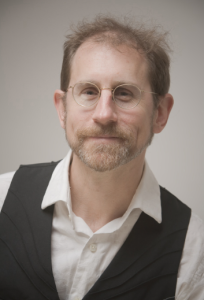
Erik Davis is an American writer, scholar, journalist, and public speaker whose writings range from rock criticism to cultural analysis to esoteric explorations of California’s history.
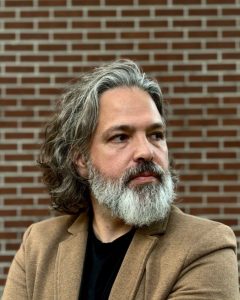
J.F. Martel is a Canadian author, filmmaker, lecturer, and cultural critic known for his work on the arts, philosophy, and the uncanny. With a background in film production and an interest in metaphysics, Martel explores the intersections of creativity and the ineffable, challenging conventional boundaries of understanding. He is best known for his book Reclaiming Art in the Age of Artifice, which argues for the intrinsic value of art beyond commodification and utilitarianism. Martel’s writings often appear in various publications, where he discusses the spiritual and existential dimensions of culture. As a filmmaker, he has directed several documentaries and short films. Through his work, Martel invites audiences to reconsider their perceptions of reality and embrace the mysteries that lie beneath the surface of the workaday world. He co-hosts the Weird Studies podcast with the music historian Phil Ford.