JM105: The Awful Truth
The Real Revealed in the Art of Horror
This course is in progress and expected to finish on October 24, 2026.
In this six-week course, JF Martel will explore the horror genre in search of what it can reveal to us about the nature of truth. Truth, it should be said, is a fraught word today, defanged in some quarters, weaponized in others. How did we come to this “post-truth” age? A close reading of horror suggests that it has less to do with relativism or cynicism than it does with a fear of certain truths we already know.
Works of horror fiction and cinema often hinge on the gradual revelation of a terrible truth, something the protagonists begin by doubting, only to be forced to reckon with it as the story unfolds. On the surface, this truth may seem to be nothing more than the ghost, vampire, or demon at the centre of the narrative. But in the most memorable instances, the monster merely embodies a deeper truth, that of an entire world which, through the monster, replaces the illusory world the characters have so far inhabited. In accepting the truth, the characters realize, paradoxically, that they are living in a horror story. To survive, they must “become fictitious” themselves, submitting to a total inversion of fact and make-believe, reason and superstition.
But this course is more than an exercise in literary and film criticism. Horror is a genre that belongs fully to our secular age, and in it the problem of the modern is perhaps most fully articulated. Why does a culture that has stopped believing in spirits insist on paying to be frightened by them, and why does that fright, at some level, feel more like being reminded of something than being told something new? Is the secular, disenchanted self we take for granted really a neutral baseline, or is it a construction, built for purpose? Is horror an ongoing rehearsal for the toppling of this edifice?
Course sessions will pair primary horror texts and films—everything from The King in Yellow and Nosferatu to Stephen King and John Carpenter—with a range of philosophical, psychoanalytic, sociological, and comparative-religious material, including work by Julia Kristeva, Martin Heidegger, Tzvetan Todorov, Octave Mannoni, Sigmund Freud, Max Picard, Mircea Eliade, George Steiner, Charles Taylor, and Victoria Nelson.
Format
The course consists of six weekly lectures, each 90 minutes long, and as many “office hours” sessions, where students can ask J.F. questions and contribute their own ideas to the evolving discussion. The course includes a dedicated feed where the instructor and students can post thoughts, share links, and engage in discussion between Zoom sessions.
Schedule
The course begins on Thursday, September 17, 2026, and ends with a final group discussion on Saturday, October 24. All meetings take place over Zoom via the Weirdosphere learning platform.
Lecture Hall will take place on Thursdays, at 5 p.m. PT / 8 p.m. ET. Meetings are recorded to allow students in more distant time zones to attend asynchronously.
Office Hours will be held as follows:
- Sundays on September 20, 27, Oct 4, 18, at 12 p.m. PT / 3 p.m. ET.
- Saturdays on October 10, 24, at 12 p.m. PT / 3 p.m. ET.
This time slot is chosen to allow students from as many time zones as possible to attend live. Like the lectures, these sessions will be recorded.
All recorded sessions will remain available to registered students after the course is over, in video and audio format.
Instructor Bio
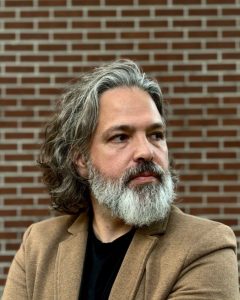
J.F. Martel is a Canadian author, filmmaker, lecturer, and cultural critic known for his work on the arts, philosophy, and the uncanny. With a background in film production and an interest in metaphysics, Martel explores the intersections of creativity and the ineffable, challenging conventional boundaries of understanding. He is best known for his book Reclaiming Art in the Age of Artifice, which argues for the intrinsic value of art beyond commodification and utilitarianism. Martel’s writings often appear in various publications, where he discusses the spiritual and existential dimensions of culture. As a filmmaker, he has directed several documentaries and short films. Through his work, Martel invites audiences to reconsider their perceptions of reality and embrace the mysteries that lie beneath the surface of the workaday world. He co-hosts the Weird Studies podcast with the music historian Phil Ford.