WS105: Chasing the Sandworm
Reading Dune as Prophecy
This course starts January 7, 2027.
After many rejections from publishers, Frank Herbert’s Dune hit the bookshelves in 1965 and soon became the bestselling science fiction novel of all time. Few works of speculative fiction offer as transporting an experience as this tale of a psychoactive desert planet bearing the weight of a creaking galactic empire. The novel is a desert well to which artists, environmentalists, mystics, filmmakers, and political theorists continue to return to for gulps of wonder and insight.
Like all the greatest stories, Dune is as cynical as it is visionary, as imaginative as it is realistic, as entertaining as it is brimming with ideas. More than an epic yarn, Dune is also an unprecedented act of world-building, one that brings together a sophisticated understanding of religion with the new paradigm of ecological systems theory. What results is a kind of testament or scripture for a planetary age.
Dune asks many questions yet provides no easy answers. Above all, it is a book of riddles: a work of prophecy warning us against prophets, a messianic story subverting all “chosen one” narratives, a spiritually sensitive book about religion deployed as social control. Its author may well have balked at the idea of reading his work as prophecy. But in this time of increasing desertification, rampant automation, weaponized psychedelia-cybernetic control, and charismatic politics, how are we to read Dune if not as a beguiling feat of prognostication?
In this course, Erik Davis and J.F. Martel will approach Herbert’s classic from multiple angles. Each session will bring the novel into dialogue with a different theme or body of thought: from ecology and the rise of environmental consciousness to oil and the geopolitics of scarcity; from chiliastic religion and social engineering to the postwar California legacy of psychedelics, parapsychology, and the human potential movement. As they did last year with Herman Melville’s Moby-Dick, Martel and Davis will draw on the work of diverse thinkers and artists in exploring Dune. Participants can expect brushes with Martin Heidegger, Alan Watts, James Lovelock, Ibn Arabi, Carl Jung, Max Weber, David Lynch, and others. Focusing on a set number of chapters each week, the course is designed for participants to read along with the instructors, be it for the first time or the seventh.
Herbert tells us that the Fremen plant a “thumper” in the sand when they want to call forth one of the great sandworms of Arrakis. Weirdosphere invites you to join Erik Davis and J.F. Martel as they plant a thumper all their own in the arid wastes of our era and prepare to encounter what emerges from below.
Format
The course consists of five weekly Lecture Halls, each 90 minutes long, and as many Office Hours sessions, where students can interact with J.F. and Erik by asking questions and contributing ideas to the evolving discussion.
The course also includes a dedicated feed where instructors and participants can post thoughts, share links, and exchange between lectures. Sessions are recorded for asynchronous viewing and remain available to registered participants after the course concludes.
Schedule
The course begins on Thursday, January 7, 2027, and ends with a final group discussion on Sunday, February 7, 2027. All meetings take place over Zoom via the Weirdosphere learning platform.
-
Lecture Hall sessions will take place on Thursdays, at 5 pm Pacific / 8 pm Eastern. These meetings are recorded to allow students in more distant time zones to attend asynchronously.
-
Office Hours sessions will take place on Sundays, at 12 pm Pacific / 3 pm Eastern. This time slot is chosen to allow students from as many time zones as possible to attend live. Like the lectures, these sessions will be recorded.
Sessions are recorded and remain available to registered participants after the course concludes.
Homework
From week to week, Erik and J.F. will assign chapters of Dune to be read or listened to. A chapter-selection approach allows for close reading while not overwhelming participants with the entire book, which they nonetheless are encouraged to read or listen to. During the Lecture Hall sessions, J.F. and Erik will present their insights on the selected chapters for the week before engaging in dialogue. Additional supplement materials may be assigned for discussion during Office Hours.
Instructor Bio
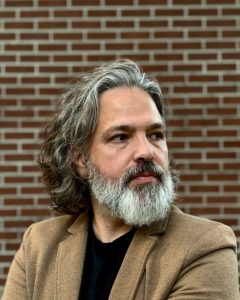
J.F. Martel is a Canadian author, filmmaker, lecturer, and cultural critic known for his work on the arts, philosophy, and the uncanny. With a background in film production and an interest in metaphysics, Martel explores the intersections of creativity and the ineffable, challenging conventional boundaries of understanding. He is best known for his book Reclaiming Art in the Age of Artifice, which argues for the intrinsic value of art beyond commodification and utilitarianism. Martel’s writings often appear in various publications, where he discusses the spiritual and existential dimensions of culture. As a filmmaker, he has directed several documentaries and short films. Through his work, Martel invites audiences to reconsider their perceptions of reality and embrace the mysteries that lie beneath the surface of the workaday world. He co-hosts the Weird Studies podcast with the music historian Phil Ford.
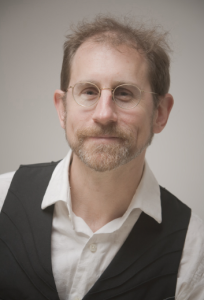
Erik Davis is an American writer, scholar, journalist, and public speaker whose writings range from rock criticism to cultural analysis to esoteric explorations of California’s history.